My Menu Mentor · mymenumentor.com/recipes/sour-cream-cheddar-hashbrown-casserole
Back to the indexCasseroles
Sour Cream and Cheddar Hashbrown Casserole
A sturdy, sharp-cheddar potato bake that relies on sour cream and a hot oven rather than canned soup.
- Prep
- 15 minutes
- Cook
- 1 hour
- Total
- 1 hour 15 minutes
- Yield
- one 9x13 pan
Print the card
The card carries the title, timings, ingredients and method. Add what you want beside them — currently one sheet.
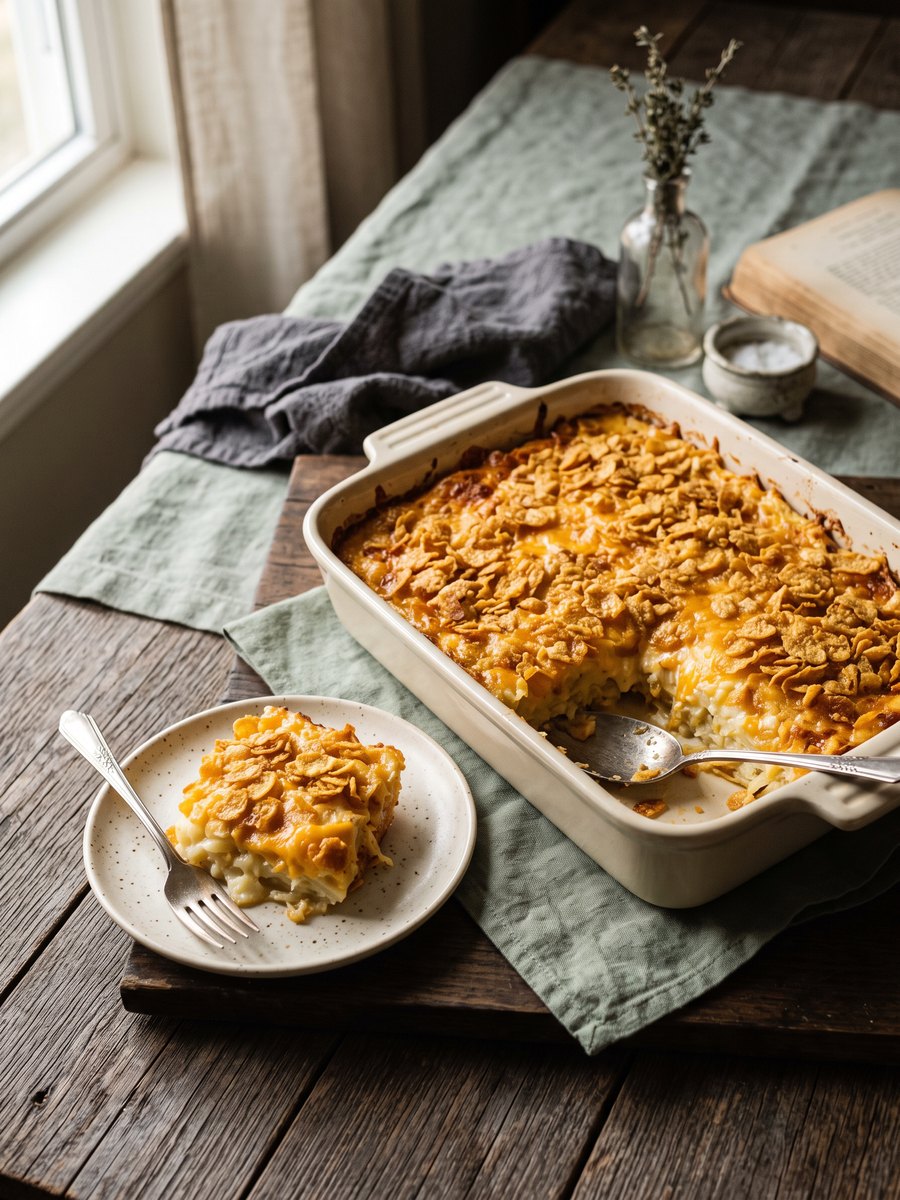
Most potato casseroles fail by turning into a dense, gluey block. This happens when the potatoes are over-mixed with heavy canned soups that bind the starches too tightly. By using sour cream and a touch of chicken broth instead, the potatoes remain distinct and tender, bound only by the melted cheese and their own natural starches.
Sharp cheddar provides the necessary structural fat and flavor, while the sour cream adds a tang that cuts through the richness. Using frozen, thawed hashbrowns is not a shortcut to apologize for; their pre-cooked, dehydrated state allows them to absorb the dairy mixture without releasing excess water into the pan, preventing a watery base.
This casserole requires a full hour in the oven to achieve the necessary browned, crisp edges that contrast with the soft interior. It holds its heat well, making it suitable for transport to potlucks or holiday tables. Leftovers reheat cleanly in a skillet, where the bottom layer crisps further in its own rendered fat.
What you need
Ingredients
Measurements
Metric converts only measures that are mathematically safe. Density-dependent cups stay as Nicole wrote them.
Scaling this one
This recipe is written to fill one 9x13 pan, so there is no batch slider: doubling the quantities would not give you a deeper pan, it would give you two of them — and the bake time and temperature below would no longer be right. To make more, run the recipe twice in separate tins rather than crowding one.
- 30 ounces frozen shredded hashbrown potatoes, thawed
- 16 ounces sour cream, full fat
- 1/2 cup unsalted butter, melted
- 1/2 cup low-sodium chicken broth
- 1/2 cup yellow onion, finely diced
- 1 teaspoon kosher salt
- 1/2 teaspoon black pepper, freshly ground
- 16 ounces sharp cheddar cheese, freshly grated and divided
How it goes
Method
Read the whole thing once before you start. Nothing here is difficult, but the timing is unforgiving at the end.
Preheat and prepare pan
Preheat the oven to 375°F. Lightly grease a 9x13-inch ceramic or glass baking dish with butter. A hot oven is necessary to crisp the top layer before the dairy separates.
Combine the wet ingredients
In a large mixing bowl, whisk together the sour cream, melted butter, chicken broth, diced onion, kosher salt, and black pepper until smooth. This ensures the seasoning is evenly distributed before the potatoes are added.
Fold in potatoes and cheese
Add the thawed hashbrowns and 12 ounces of the grated cheddar cheese to the bowl. Fold gently with a rubber spatula just until the potatoes are coated. Over-mixing will break the shreds and release excess starch, leading to a gummy texture.
Transfer to baking dish
Spread the mixture evenly into the prepared baking dish. Do not pack it down tightly; leaving it slightly loose allows heat to circulate and prevents a dense final texture.
Top with remaining cheese
Sprinkle the remaining 4 ounces of grated cheddar evenly over the top. This creates a protective barrier that browns and crisps, shielding the potatoes below from drying out.
Bake until bubbling
Bake uncovered for 55 to 60 minutes. The casserole is done when the edges are deeply browned, the center is bubbling vigorously, and the top cheese layer is crisp and golden.
Rest before serving
Remove from the oven and let rest for 10 minutes before serving. This brief cooling period allows the starches to set and the dairy to reabsorb, ensuring clean portions when scooped.
On the bench
Equipment
1 of these change the result. The rest are conveniences, with a workaround given. Nothing here is a brand recommendation — the spec is what matters.
The search links are paid affiliate links. If you buy through one, My Menu Mentor may earn a commission at no extra cost to you. No prices are shown because we will not quote a price we cannot keep current.
9x13-inch ceramic or glass baking dish
The dish's dimensions and material moderate heat transfer so the top crisps while the interior heats through without the dairy separating; a different vessel will alter that balance.
- What matters
- 9x13-inch ceramic or glass baking dish with even heat tolerance for 375°F and straight sides to encourage even bubbling.
- Search for
- “9x13 ceramic baking dish” (paid link)
Box grater (coarse side)
OptionalGrating the cheddar from a block produces the smooth, melty cheese the sauce needs; pre-shredded cheese contains anti-caking agents that prevent proper melting.
- What matters
- Box grater with a coarse shred side large enough to grate 16 ounces of cheddar efficiently and produce uniform shreds.
- If you skip it
- A food processor fitted with a shredding disk will work—shred the cheese just before using and avoid pre-shredded packaged cheese.
- Search for
- “box grater coarse shred” (paid link)
The list
What to buy
The same 8 ingredients, sorted the way a store is laid out rather than the order you cook them. Tick things off as you go.
0 of 8 gathered
Produce
Meat & Seafood
Dairy & Eggs
Spices & Staples
Shop these ingredients
One-tap grocery delivery for this list is planned, and this is where it will appear. Until it is connected, copy the list and paste it into whichever grocery app you already use.
Ticks stay in this browser tab only — nothing is saved or sent anywhere.
Cook's notes
What we would tell a friend
- Thawing the potatoes is mandatory. Using frozen potatoes will lower the mixture temperature, increase the baking time, and release water that makes the casserole soupy.
- Grate the cheese from a block. Pre-shredded cheese is coated in anti-caking agents (cellulose) that prevent it from melting smoothly and binding the casserole.
- To make ahead, assemble the casserole completely, cover tightly with foil, and refrigerate for up to 24 hours. Add 15 minutes to the baking time if baking straight from the refrigerator.
- Store leftovers in an airtight container in the refrigerator for up to 4 days. Reheat individual portions in a skillet over medium heat to restore the crisp edges.
From the kitchen
Loading notes…
Keep reading
Next in the index
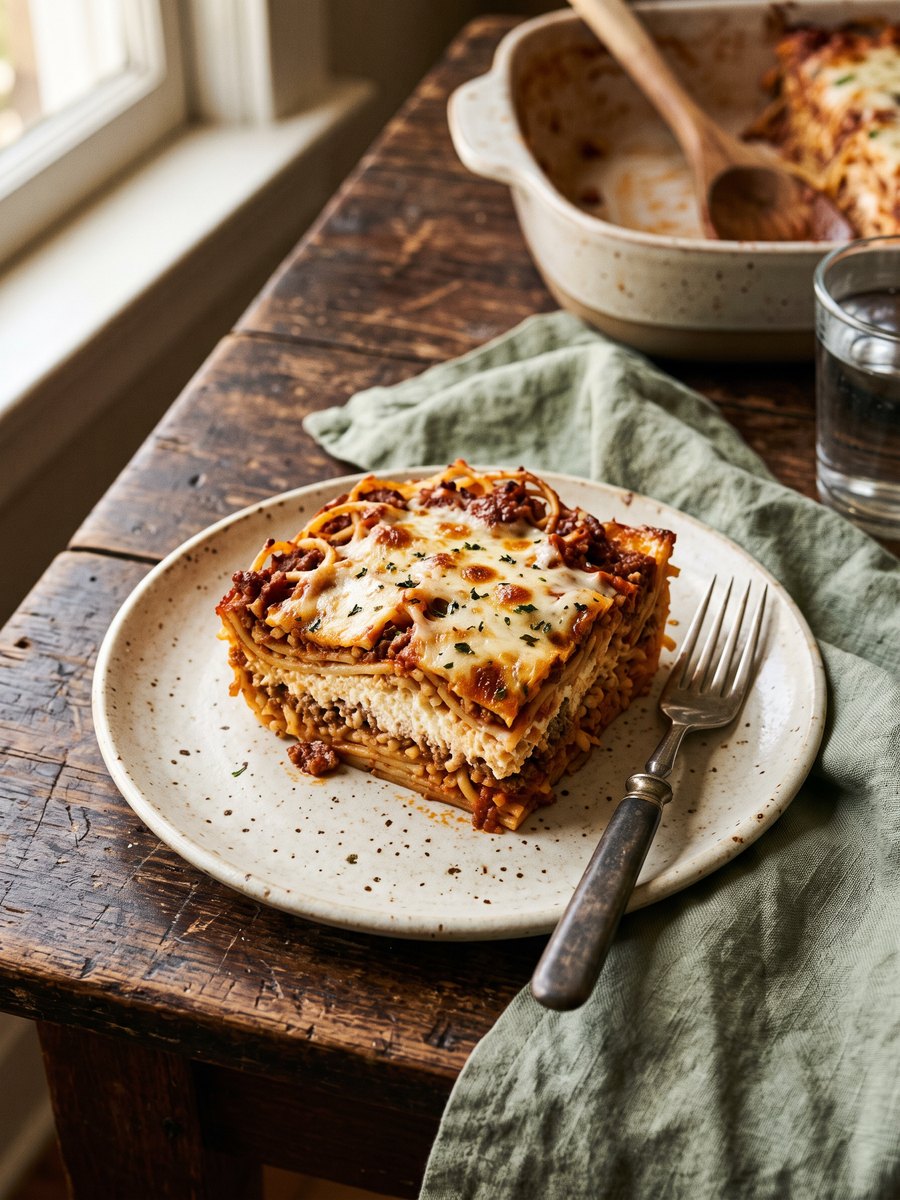
Baked Spaghetti with Ricotta and Mozzarella
A sturdy, sliceable pasta bake that relies on a ricotta binding layer to prevent the noodles from turning to mush.
1 hour 40 minutes · 8 servings
Casseroles
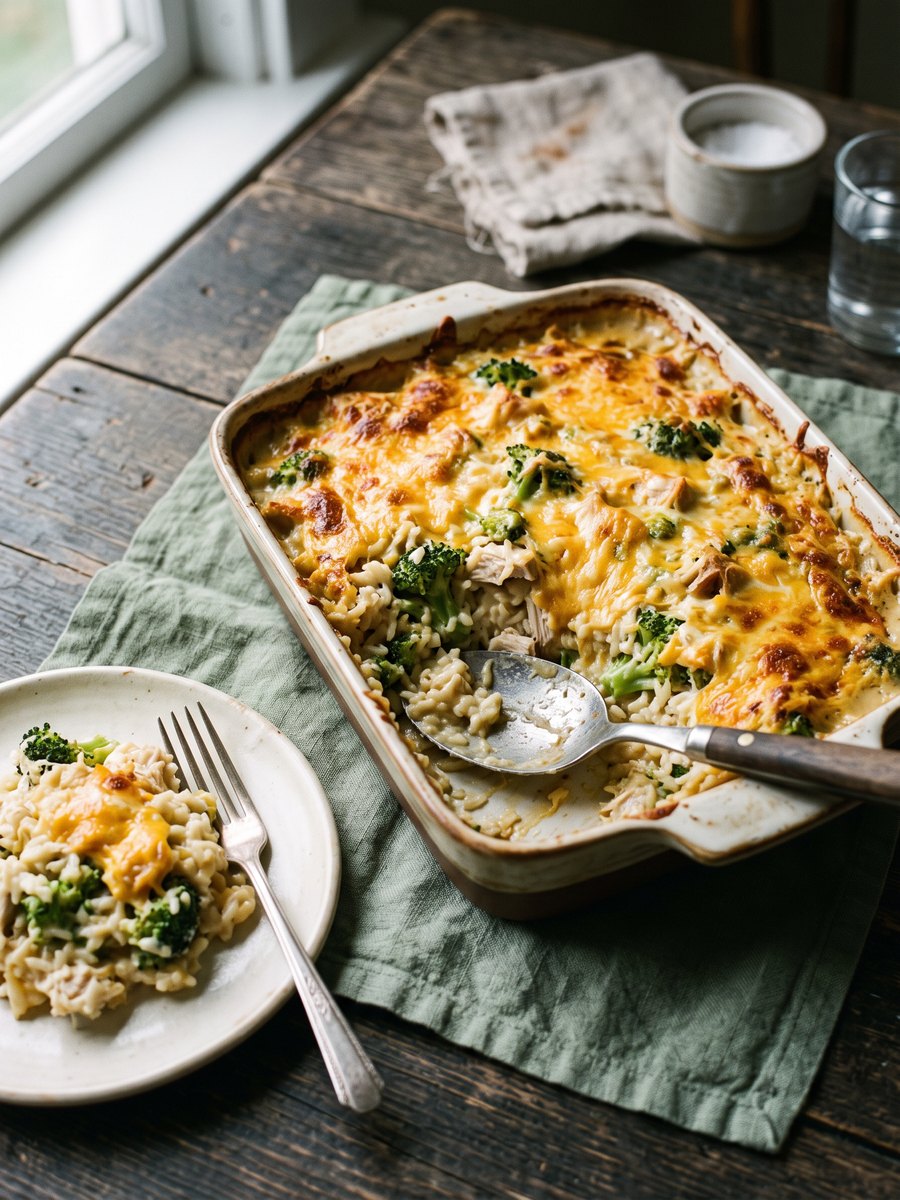
From-Scratch Chicken and Broccoli Rice Casserole
A sturdy, reliable bake built on a sharp cheddar mornay sauce and fresh broccoli, bypassing the canned soup entirely.
1 hour 15 minutes · 6 to 8 servings
Casseroles