My Menu Mentor · mymenumentor.com/recipes/sheet-pan-harissa-chicken-chickpeas
Back to the indexSheet Pan
Sheet Pan Harissa Chicken with Chickpeas
One pan, forty minutes, and a tray of chickpeas that turn crisp in the chicken fat instead of steaming into mush.
- Prep
- 10 minutes
- Cook
- 35 minutes
- Total
- 45 minutes
- Yield
- 4 servings
Print the card
The card carries the title, timings, ingredients and method. Add what you want beside them — currently one sheet.
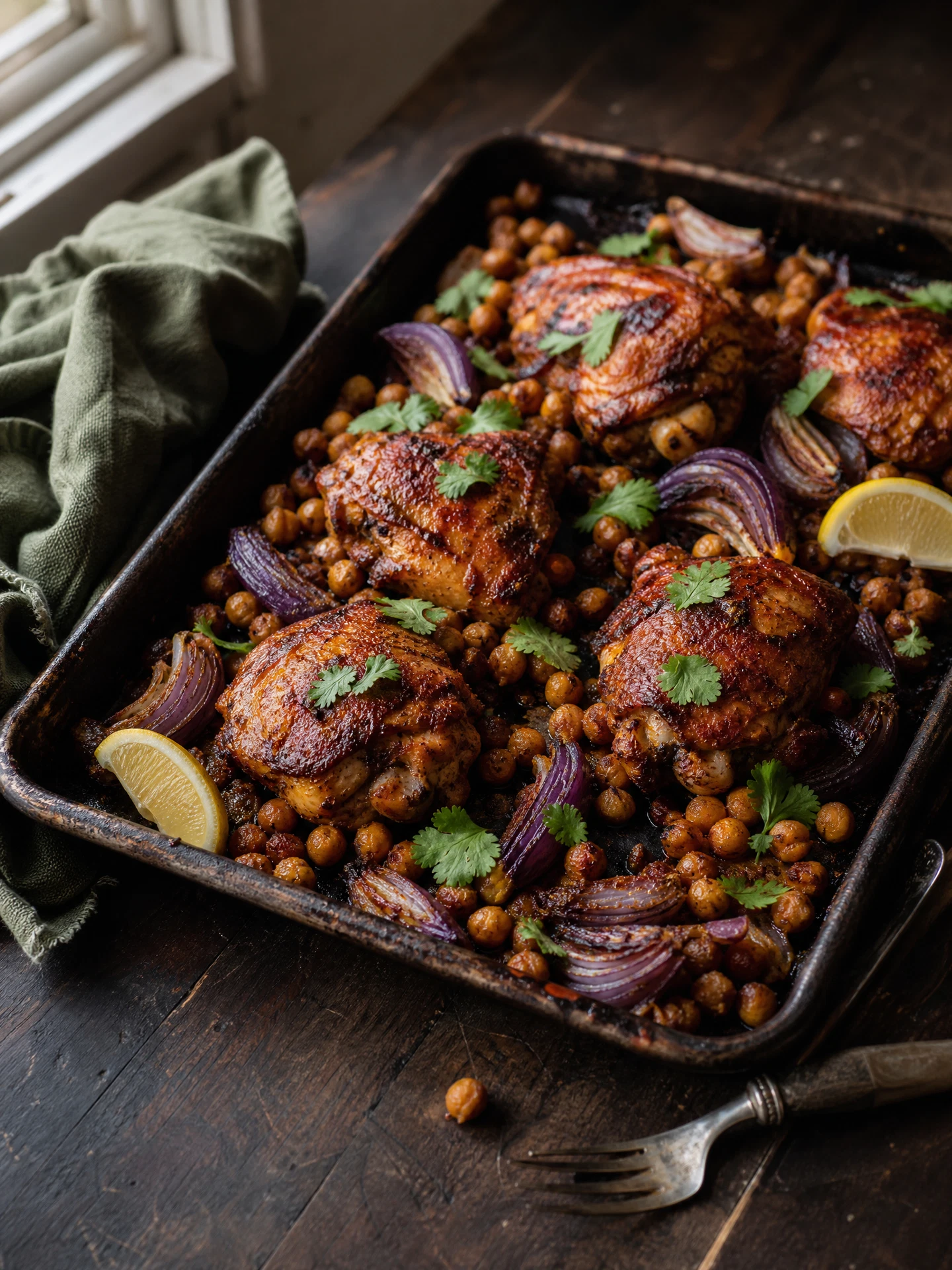
The promise of a sheet pan dinner is that everything finishes at once, and the reason it so often fails is that a tray holds only so much dry heat. Pile chicken thighs and canned chickpeas onto the same pan straight from the tin and you get pale skin sitting in a shallow pool of bean liquid. The moisture has to go somewhere, and in a crowded pan it goes into the air just above the food, where it condenses and steams whatever it touches.
Two adjustments fix it. The chickpeas are drained and rolled dry in a towel before they are dressed, which removes the water that would otherwise flood the pan, and the harissa is thinned with oil and yogurt rather than used at full paste strength, so it glazes instead of scorching. The thighs go skin-side up on top of the chickpeas rather than beside them: rendering fat drips down into the beans and crisps their exteriors, which is the whole reason the dish is built in this order.
It is a forty-minute dinner that needs about eight minutes of your attention, all of it at the start. Roast it while you set the table. Leftovers are unusually good, because the chickpeas keep their bite in the refrigerator and the harissa deepens overnight; fold the whole tray into a grain bowl for lunch the next day.
What you need
Ingredients
Measurements
Metric converts only measures that are mathematically safe. Density-dependent cups stay as Nicole wrote them.
Scale the batch
4 servings
Chicken and glaze
- 8 bone-in, skin-on chicken thighs (about 2 1/2 pounds)
- 3 tablespoons harissa paste
- 2 tablespoons extra-virgin olive oil
- 2 tablespoons whole-milk plain yogurt
- 1 teaspoon ground cumin
- 1 1/4 teaspoons kosher salt
- 1/2 teaspoon freshly ground black pepper
The tray
- Two 15-ounce cans chickpeas, drained and rinsed
- 1 large red onion, cut into 1/2-inch wedges
- 1 tablespoon extra-virgin olive oil
- 1 lemon, half juiced and half cut into wedges
- 1/3 cup cilantro or flat-leaf parsley leaves, roughly torn
How it goes
Method
Read the whole thing once before you start. Nothing here is difficult, but the timing is unforgiving at the end.
Dry the chickpeas properly
Preheat the oven to 425°F (220°C). Drain and rinse the chickpeas, then spread them on a clean towel and roll them gently back and forth until the surfaces look matte rather than glossy. This is the step that decides whether they crisp or steam, and it takes under a minute.
Mix a glaze, not a paste
Whisk the harissa, olive oil, yogurt, cumin, salt and pepper in a small bowl until it pours from the whisk in a ribbon. Harissa used neat sits in thick patches that burn before the chicken is cooked; the oil carries it across the skin and the yogurt's dairy sugars brown gently instead of scorching.
Dress the tray first
Toss the dried chickpeas and onion wedges with the tablespoon of oil directly on a large rimmed baking sheet, then spread them into an even layer. Leave the pan uncovered — no foil, no parchment, since both trap steam under the beans.
Set the chicken on top
Pat the thighs dry with paper towel, then coat them all over with the glaze. Arrange them skin-side up on the chickpeas with an inch of space between them. The fat renders down into the beans as they roast, which is the flavor engine of the dish.
Roast without turning
Roast 32 to 38 minutes, until the skin is bronzed and taut and the thickest thigh reads 175°F at the bone. Thighs are forgiving above 165°F — the connective tissue softens in the 170s, so aim high rather than pulling early. Do not stir the tray; disturbing it undoes the crisping.
Finish bright, off the heat
Squeeze the lemon half over the hot pan and scatter the herbs across the top. Rest 5 minutes so the juices settle back into the meat, then serve straight from the tray with the lemon wedges alongside.
On the bench
Equipment
2 of these change the result. The rest are conveniences, with a workaround given. Nothing here is a brand recommendation — the spec is what matters.
The search links are paid affiliate links. If you buy through one, My Menu Mentor may earn a commission at no extra cost to you. No prices are shown because we will not quote a price we cannot keep current.
Large heavy rimmed baking sheet
Everything about this recipe depends on the tray being big enough that the thighs do not touch. A crowded pan steams the chickpeas and leaves the skin flabby.
- What matters
- Half-sheet, 13x18 inches, uncoated heavy-gauge aluminum. Two smaller pans on separate racks beat one overloaded pan.
Instant-read thermometer
Thighs are best pulled at about 175°F, above the safety minimum, and skin color is a poor guide to interior temperature when a glaze is involved.
- What matters
- Digital with a thin probe, reading in a few seconds. Measure near the bone without touching it.
Flexible bench scraper or thin metal spatula
OptionalRoasted chickpeas stick where the glaze has caramelized, and a stiff thin edge lifts them off in one sheet rather than crushing them.
- What matters
- Thin, unbeveled metal edge at least 4 inches wide.
- If you skip it
- A sturdy wooden spoon works if you scrape from the pan's edge inward while the tray is still hot.
- Search for
- “thin metal turner spatula” (paid link)
The list
What to buy
The same 12 ingredients, sorted the way a store is laid out rather than the order you cook them. Tick things off as you go.
0 of 12 gathered
Produce
Meat & Seafood
Dairy & Eggs
Pantry
Spices & Staples
Everything else
Shop these ingredients
One-tap grocery delivery for this list is planned, and this is where it will appear. Until it is connected, copy the list and paste it into whichever grocery app you already use.
Ticks stay in this browser tab only — nothing is saved or sent anywhere.
Cook's notes
What we would tell a friend
- Harissa brands vary enormously in heat. Taste yours first; if it is fierce, start with 2 tablespoons and make up the volume with an extra spoon of yogurt.
- Boneless thighs work but cook in 22 to 25 minutes, which does not give the chickpeas long enough to crisp. If you use them, give the tray a 10-minute head start in the oven before the chicken goes on.
- The mistake to avoid is skipping the towel. Wet chickpeas release enough liquid to poach the underside of every thigh, and no amount of extra oven time recovers it.
- For a vegetarian tray, swap the chicken for thick wedges of cauliflower brushed with the same glaze and roast 25 minutes.
From the kitchen
Loading notes…
Keep reading
Next in the index
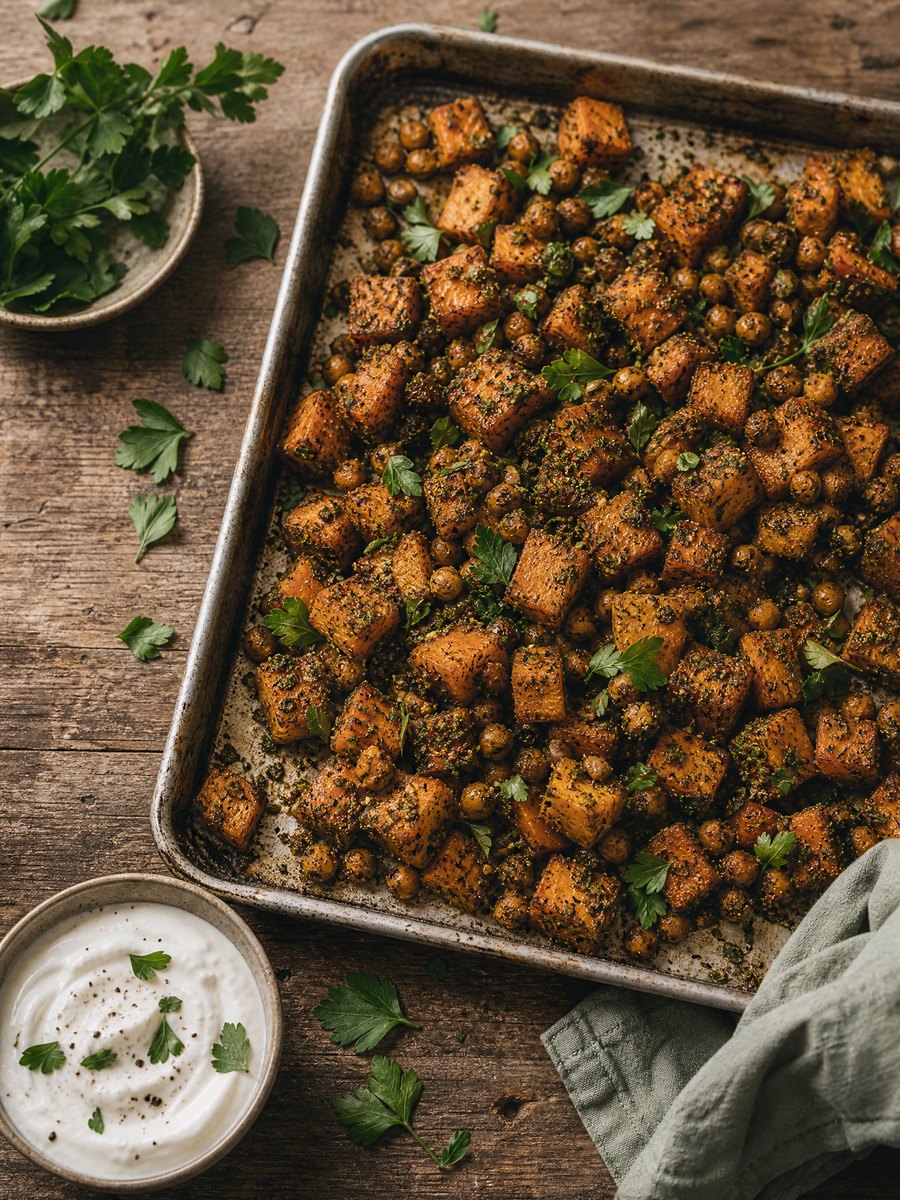
Sheet Pan Za'atar Chickpeas and Squash
A dinner built entirely on a single baking sheet, relying on high heat and a heavy hand with the spice blend to turn dense vegetables tender and crisp.
50 minutes · 4 servings
Sheet Pan
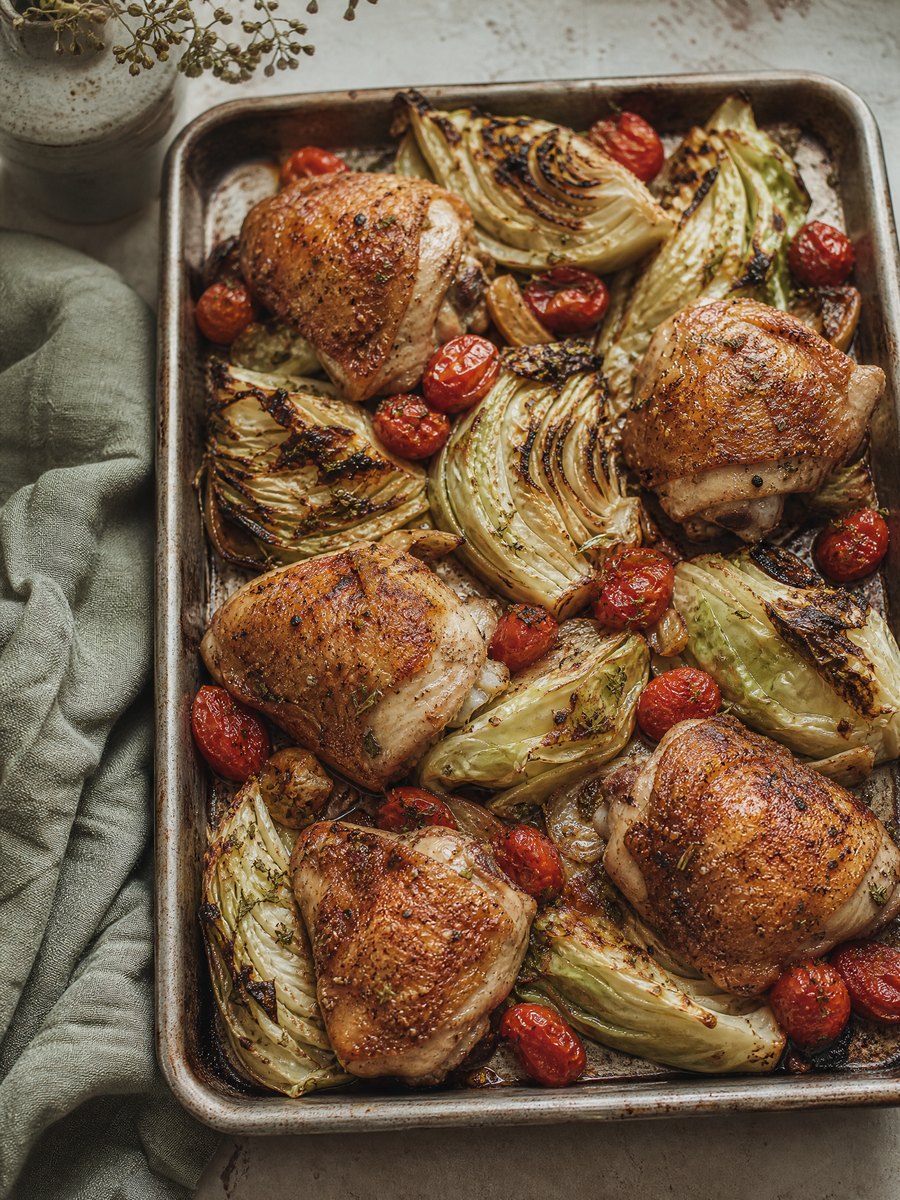
Sheet Pan Chicken Thighs with Cabbage
A single-pan dinner that relies on high heat to turn cabbage from a dense vegetable into something deeply savory and charred.
1 hour · 4 servings
Sheet Pan