My Menu Mentor · mymenumentor.com/recipes/garlic-butter-pork-chops-spinach
Back to the indexSkillet Suppers
Garlic Butter Pork Chops with Wilted Spinach
Twenty minutes, one skillet, and a pork chop that stays juicy because it comes off the heat five degrees early.
- Prep
- 5 minutes
- Cook
- 15 minutes
- Total
- 20 minutes
- Yield
- 2 servings, easily doubled
Print the card
The card carries the title, timings, ingredients and method. Add what you want beside them — currently one sheet.
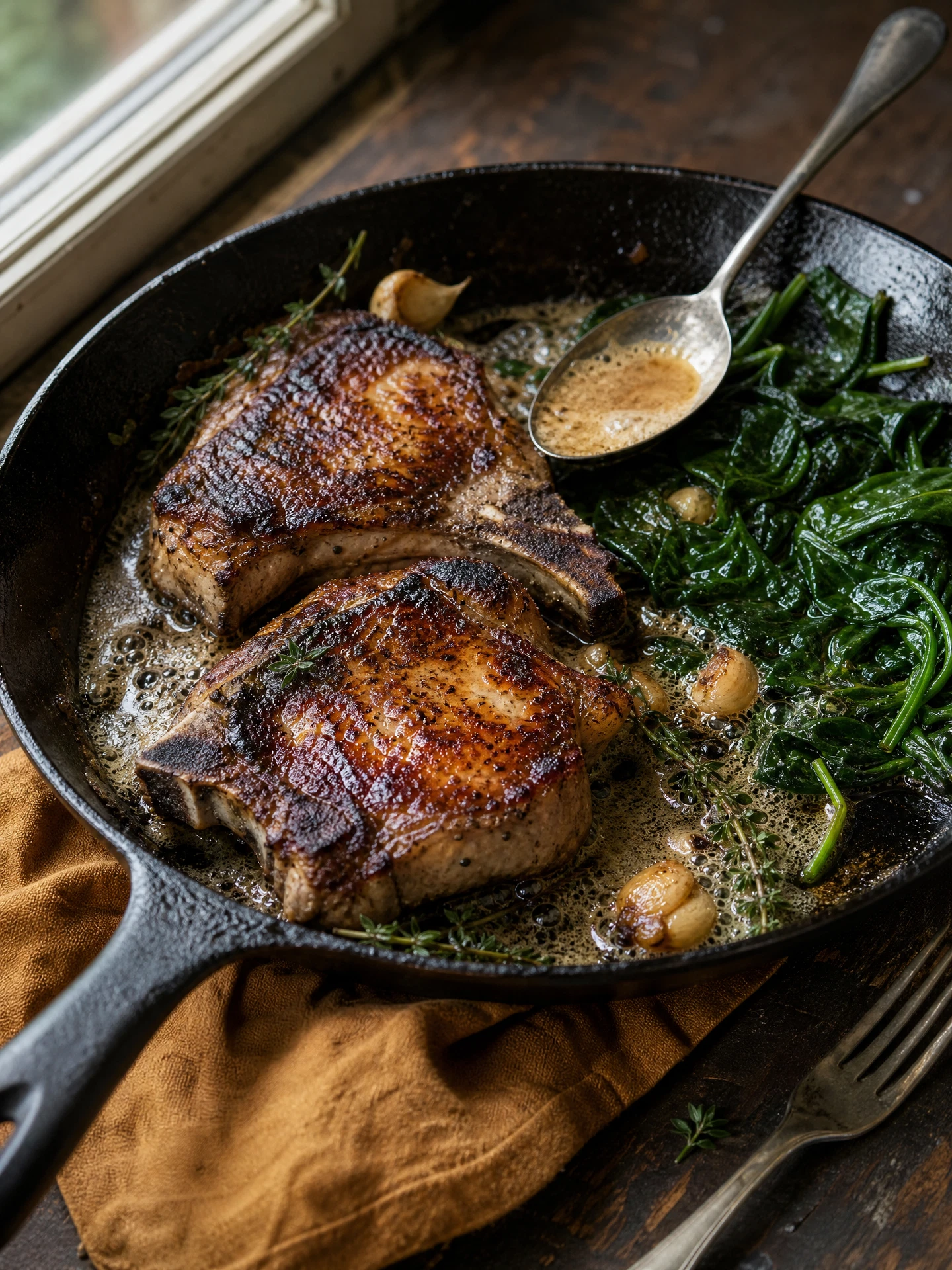
Pork chops earned their reputation for dryness honestly, and the cause is almost always a single number. Cooked to the 160°F that older guidance recommended, a loin chop has lost most of its moisture; pulled at 145°F and rested, the same chop is faintly pink at the center and genuinely juicy. The USDA lowered the guidance to 145°F in 2011, and the whole character of the cut changed with it.
The second problem is thickness. Thin chops cannot be browned and cooked through in the same window — by the time a crust forms, the interior has overshot. Buy them at least an inch thick, sear hard on both sides, then drop the heat and finish with butter, garlic and thyme, tilting the pan to spoon the foaming butter over the top. That basting is not decoration: it cooks the upper surface with hot fat rather than more direct heat, which is far gentler.
The spinach goes into the same pan at the end and takes about ninety seconds, using the garlic butter the chops leave behind. Total working time is twenty minutes, all of it active, so have everything within reach before the pan goes on. This is a dinner you cook standing at the stove, not one you walk away from.
What you need
Ingredients
Measurements
Metric converts only measures that are mathematically safe. Density-dependent cups stay as Nicole wrote them.
Scale the batch
2 servings, easily doubled
- 2 bone-in pork loin chops, 1 to 1 1/4 inches thick (about 12 ounces each)
- 1 teaspoon kosher salt
- 1/2 teaspoon freshly ground black pepper
- 1 tablespoon neutral oil, such as grapeseed
- 3 tablespoons unsalted butter
- 4 cloves garlic, lightly crushed but left whole
- 4 sprigs fresh thyme
- 5 ounces baby spinach (about 6 packed cups)
- 1 tablespoon fresh lemon juice
- Flaky salt, to finish
How it goes
Method
Read the whole thing once before you start. Nothing here is difficult, but the timing is unforgiving at the end.
Salt early, dry the surface
Season the chops on all sides and leave them on a rack at room temperature for 15 minutes if you have it. The salt draws moisture out and then back in seasoned, and the surface dries as it sits. Blot them once more just before they hit the pan — a wet chop steams and never browns.
Get the pan genuinely hot
Heat the oil in a heavy skillet over medium-high until it shimmers and moves like water when you tilt the pan. A drop of water should skitter and vanish. Under-heated metal is the second most common cause of a grey chop.
Sear without moving them
Lay the chops in the pan and leave them alone for 3 to 4 minutes. Resist lifting to check; the crust needs uninterrupted contact to form. Flip once and sear the second side 3 minutes. Stand them on the fat edge for 30 seconds if there is a good cap.
Drop the heat and baste
Reduce to medium-low. Add the butter, crushed garlic and thyme. As the butter foams, tilt the pan toward you and spoon it continuously over the chops for 2 to 3 minutes. This cooks the top with hot fat rather than direct heat, which is why basted meat stays tender.
Pull at 140°F and rest
Check the thickest part away from the bone. Pull the chops onto a warm plate at 140°F — carryover heat carries them to 145°F while they rest, which is the target. Rest 5 to 8 minutes; slicing early loses the juice onto the board.
Wilt the spinach in the leavings
Return the pan to medium. Add the spinach in two handfuls, tossing until each collapses, about 90 seconds total. Squeeze in the lemon juice, taste for salt, and serve alongside the chops with the pan butter poured over and a pinch of flaky salt.
On the bench
Equipment
3 of these change the result. The rest are conveniences, with a workaround given. Nothing here is a brand recommendation — the spec is what matters.
The search links are paid affiliate links. If you buy through one, My Menu Mentor may earn a commission at no extra cost to you. No prices are shown because we will not quote a price we cannot keep current.
Cast iron or carbon steel skillet
Searing pulls a lot of heat out of the pan the moment the meat lands. Thin stainless drops below browning temperature and the chop greys instead of crusting.
- What matters
- 10 to 12 inches, at least 4 pounds. Two chops need room to sit apart; a 10-inch pan is the minimum for a doubled batch.
- Search for
- “cast iron skillet 12 inch” (paid link)
Instant-read thermometer
The entire recipe hinges on pulling at 140°F rather than 160°F, a gap of about four minutes that is invisible from the outside.
- What matters
- Digital, thin probe, reads in two to three seconds. Dial thermometers are too slow to catch this window.
Large metal spoon
Basting needs a spoon with a deep enough bowl to carry foaming butter over the meat repeatedly without dripping it all back.
- What matters
- Long-handled, deep-bowled, metal so it tolerates the pan heat.
Wire rack
OptionalSalting on a rack lets air reach every surface, so the chop dries evenly instead of sitting in its own liquid on a plate.
- What matters
- Any small cooling rack set over a plate or tray.
- If you skip it
- Season directly on a plate and blot the underside with paper towel before searing.
- Search for
- “small cooling rack” (paid link)
The list
What to buy
The same 10 ingredients, sorted the way a store is laid out rather than the order you cook them. Tick things off as you go.
0 of 10 gathered
Produce
Meat & Seafood
Dairy & Eggs
Pantry
Spices & Staples
Shop these ingredients
One-tap grocery delivery for this list is planned, and this is where it will appear. Until it is connected, copy the list and paste it into whichever grocery app you already use.
Ticks stay in this browser tab only — nothing is saved or sent anywhere.
Cook's notes
What we would tell a friend
- Boneless chops work and cook about 2 minutes faster, but they lose heat quickly on the plate. Rest them under loosely tented foil.
- If your chops are under an inch thick, skip the basting stage entirely — sear 2 minutes per side and check immediately, since they will already be close.
- The mistake to avoid is crowding. Two chops in an 8-inch pan trap steam between them and neither will brown on the facing sides.
- Swap the spinach for chard or kale, but give tougher greens an extra two minutes and a splash of water to help them collapse.
From the kitchen
Loading notes…
Keep reading
Next in the index
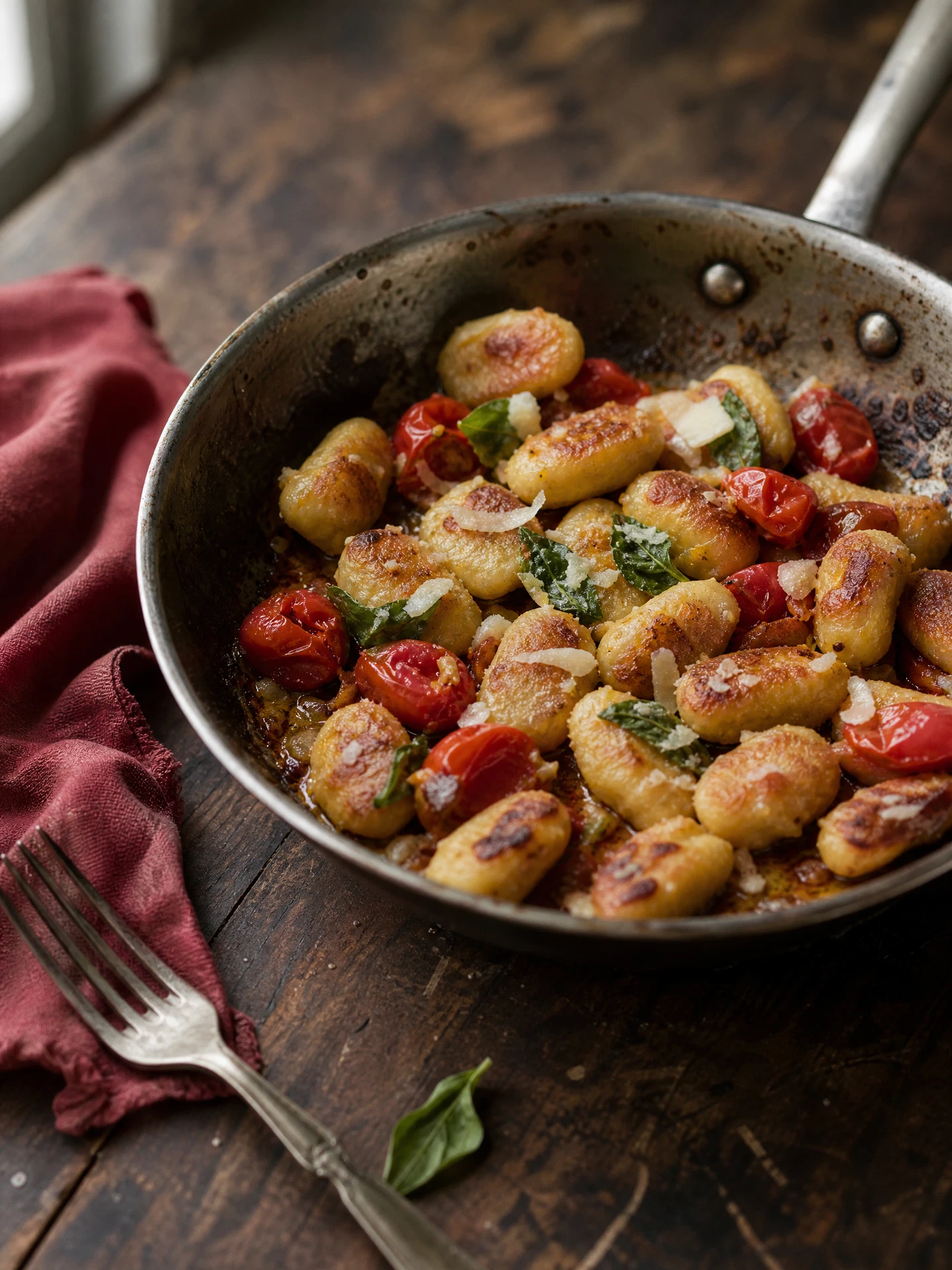
Crispy Gnocchi with Burst Tomatoes and Basil
Shelf-stable gnocchi treated like a potato rather than a pasta: dry-fried until golden, never boiled.
25 minutes · 3 to 4 servings
Skillet Suppers
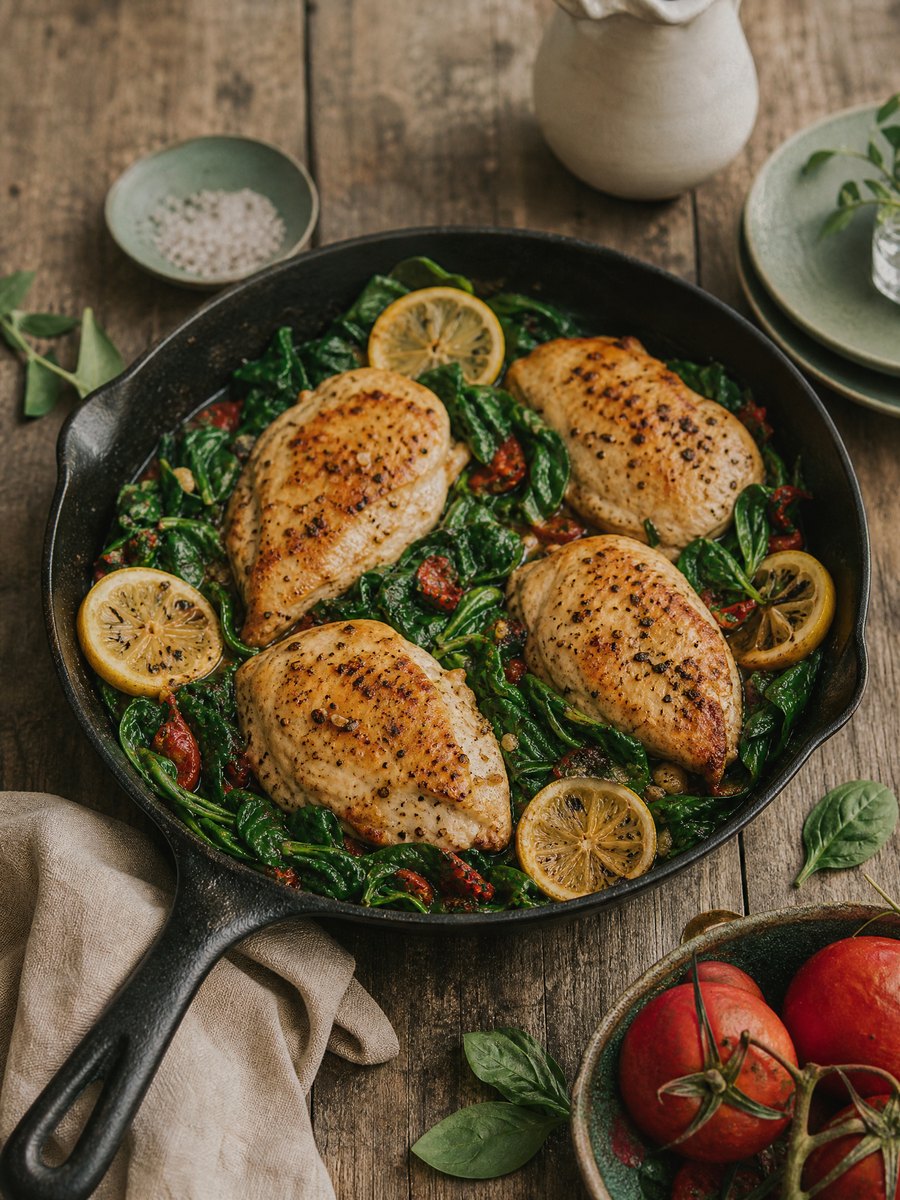
Lemon Chicken and Spinach Skillet
A single-skillet chicken dinner that relies on acid and heat rather than heavy sauces to build flavor.
25 minutes · 4 servings
Skillet Suppers