My Menu Mentor · mymenumentor.com/recipes/lemon-garlic-roasted-asparagus
Back to the indexSides & Vegetables
Lemon Garlic Roasted Asparagus with Parmesan
Asparagus does not need rescuing. It needs high heat and about twelve minutes of your attention.
- Prep
- 8 minutes
- Cook
- 14 minutes
- Total
- 22 minutes
- Yield
- 4 servings
Print the card
The card carries the title, timings, ingredients and method. Add what you want beside them — currently one sheet.
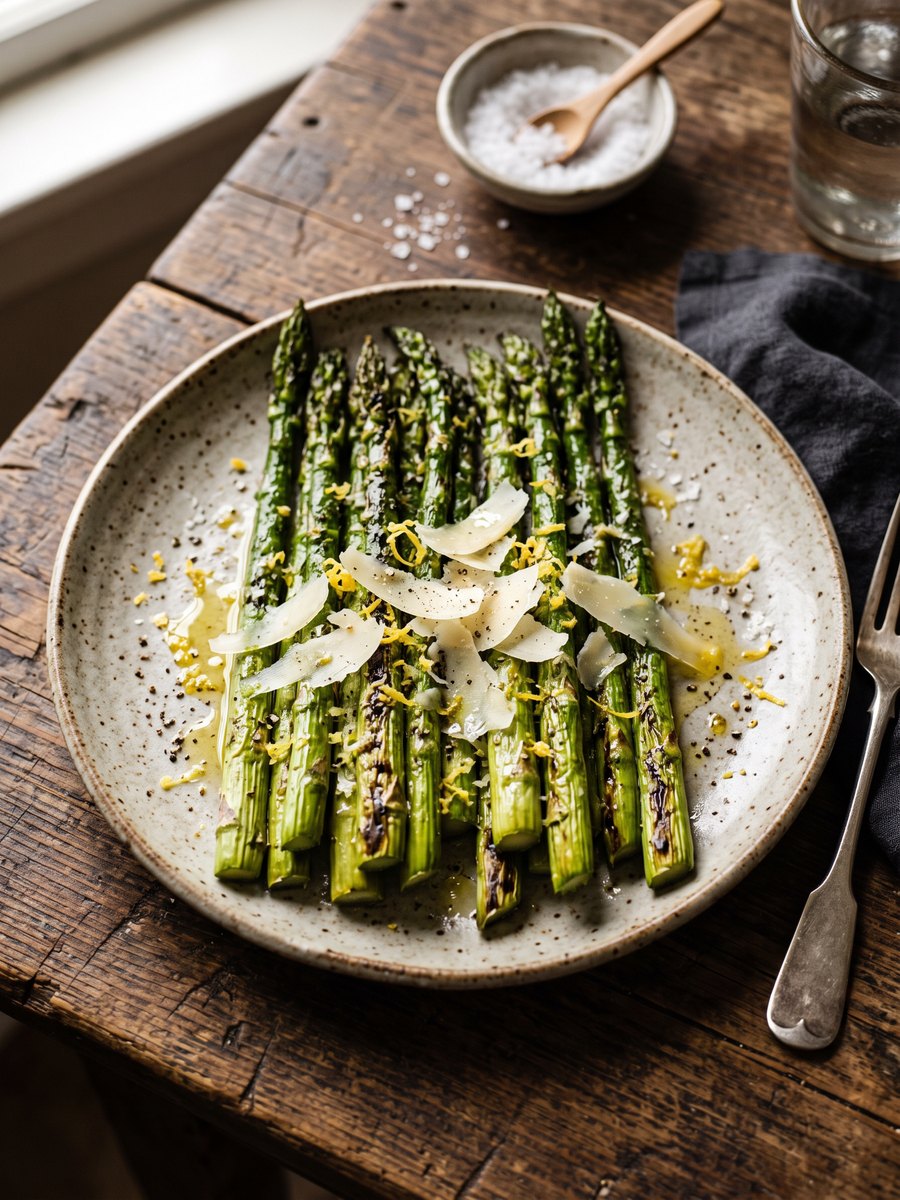
Most asparagus is ruined before it ever reaches the table, and almost always in the same way: it goes into water. Boiling and steaming pull the sugars out of the spears and leave behind something limp and faintly grassy, which is how an entire generation came to believe they disliked the vegetable. Dry heat does the opposite. At 400°F the exterior browns while the inside stays firm, and the flavor concentrates instead of leaching away.
The rest of this recipe is restraint. Garlic goes on raw and roasts alongside the spears rather than being cooked first, so it stays sweet instead of turning bitter. The lemon is split into two jobs — juice squeezed over the hot pan for acidity, zest added off the heat so the volatile oils survive. Parmesan is shaved rather than grated, which keeps it from melting into a paste and lets it sit in distinct salty flakes.
Serve it within a few minutes of pulling the pan. This is a dish with a short window, and it is worth arranging the rest of dinner around it.
What you need
Ingredients
Measurements
Metric converts only measures that are mathematically safe. Density-dependent cups stay as Nicole wrote them.
Scale the batch
4 servings
- 1 lb fresh asparagus, woody ends trimmed
- 2 tablespoons extra-virgin olive oil
- 3 cloves garlic, minced
- 1/2 teaspoon sea salt, plus more to finish
- 1/4 teaspoon freshly ground black pepper
- 1 lemon, zested, then halved
- 1/4 cup Parmesan, shaved with a peeler
How it goes
Method
Read the whole thing once before you start. Nothing here is difficult, but the timing is unforgiving at the end.
Heat the oven properly
Preheat to 400°F (200°C) and give it the full ten minutes after the light goes off. A pan that goes into an under-heated oven will steam the spears in their own moisture before it ever browns them. Line a large rimmed baking sheet with parchment.
Trim by feel, not by ruler
Bend each spear near the base until it snaps. It breaks exactly where the fiber turns woody, which varies from spear to spear. If your bunch is very thick, peel the lower two inches as well.
Dress the pan, not the bowl
Lay the asparagus directly on the sheet. Drizzle with olive oil, then scatter the garlic, salt, and pepper. Toss with your hands until every spear is slick, then spread them into a single layer with space between them. Crowding is the one mistake that cannot be corrected later.
Roast until it blisters
Roast 12 to 15 minutes, until the spears are tender at the base and the tips have begun to char and curl. Thin spears may be done at 10. Test by lifting one — it should droop slightly but not fold in half.
Finish off the heat
Squeeze half the lemon over the hot pan; it will hiss and reduce against the metal. Scatter the zest and shaved Parmesan over the top, add a final pinch of salt, and serve straight from the sheet or slide onto a warm platter. Keep the remaining lemon half at the table.
On the bench
Equipment
3 of these change the result. The rest are conveniences, with a workaround given. Nothing here is a brand recommendation — the spec is what matters.
The search links are paid affiliate links. If you buy through one, My Menu Mentor may earn a commission at no extra cost to you. No prices are shown because we will not quote a price we cannot keep current.
Heavy rimmed baking sheet
Thin sheets buckle at 400°F, and the warp tips the spears into a puddle of oil at one end, which steams them instead of roasting them.
- What matters
- Half-sheet size, 13x18 inches, uncoated aluminum. Dark nonstick pans over-brown the tips before the bases are tender.
Y-shaped vegetable peeler
The Parmesan is shaved rather than grated here, and a peeler is the only tool that takes flakes wide enough to stay distinct instead of melting into paste.
- What matters
- Y-frame with a stainless swivel blade. It doubles for peeling the lower two inches of very thick spears.
Rasp-style citrus zester
The zest goes on off the heat for its volatile oils. A rasp takes only the colored layer; a box grater drags in bitter white pith.
- What matters
- Fine-etched rasp blade with a handle and a blade guard.
- Search for
- “fine rasp zester citrus” (paid link)
Parchment paper sheets
OptionalKeeps the minced garlic from scorching against bare metal and lets you lift the whole batch off in one motion.
- What matters
- Pre-cut flat sheets sized for a half sheet pan; rolls curl and fight you.
- If you skip it
- A well-seasoned bare pan is fine. Add a minute of roasting time and lift the spears with tongs rather than a spatula.
The list
What to buy
The same 7 ingredients, sorted the way a store is laid out rather than the order you cook them. Tick things off as you go.
0 of 7 gathered
Produce
Dairy & Eggs
Pantry
Spices & Staples
Shop these ingredients
One-tap grocery delivery for this list is planned, and this is where it will appear. Until it is connected, copy the list and paste it into whichever grocery app you already use.
Ticks stay in this browser tab only — nothing is saved or sent anywhere.
Cook's notes
What we would tell a friend
- Thickness governs everything. Pencil-thin spears roast in 8 to 10 minutes; thumb-thick ones may need 18. Sort your bunch and roast like with like.
- No Parmesan? Pecorino is sharper and works. A crumble of feta added off the heat is a different dish, but a good one.
- Leftovers are better cold than reheated. Chop them into a grain salad rather than putting them back in the oven.
From the kitchen
Loading notes…
Keep reading
Next in the index
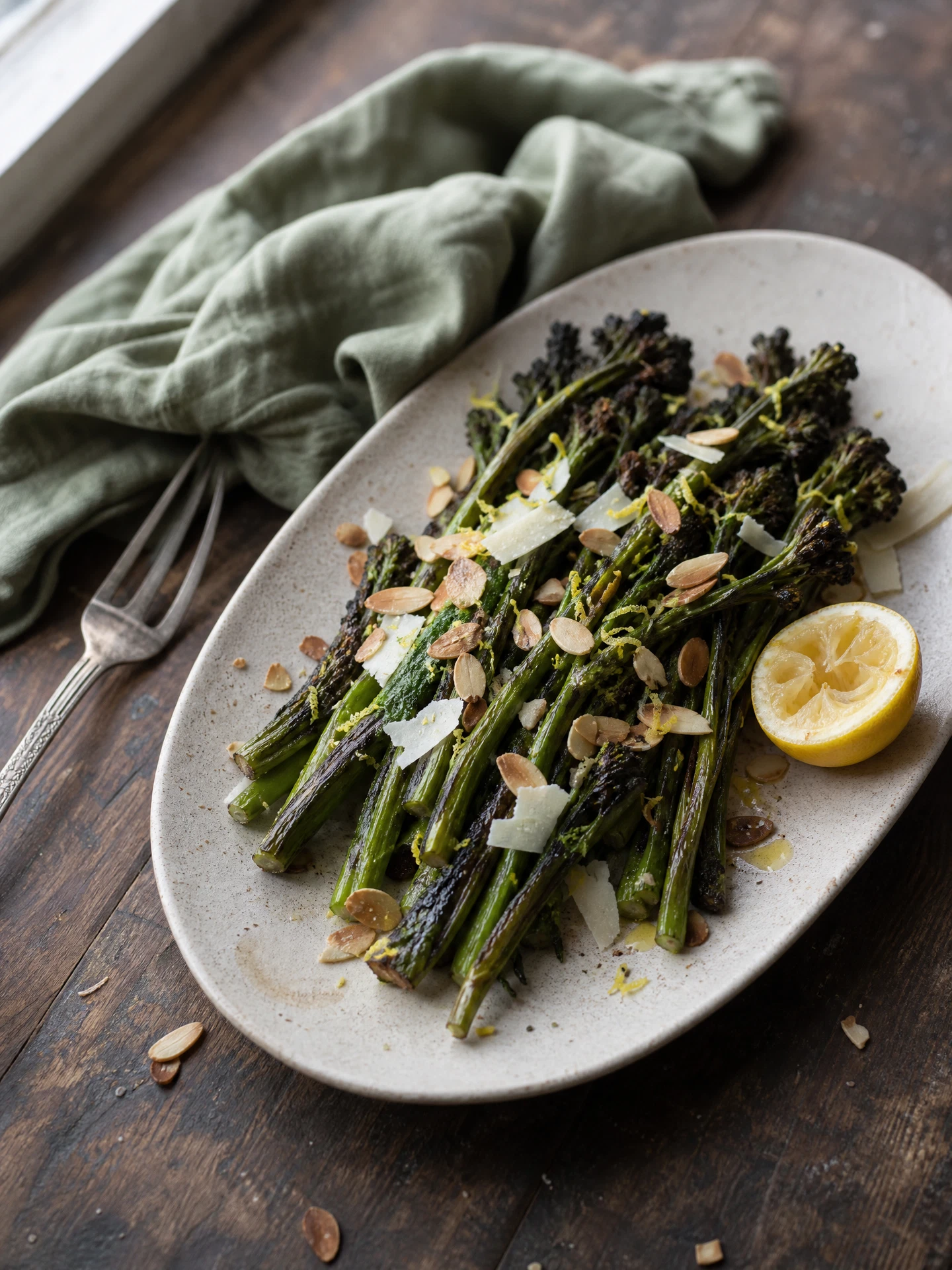
Charred Broccolini with Lemon and Almonds
High heat, a dry pan and no water: broccolini that tastes roasted in twelve minutes on the stovetop.
17 minutes · 4 servings
Sides & Vegetables
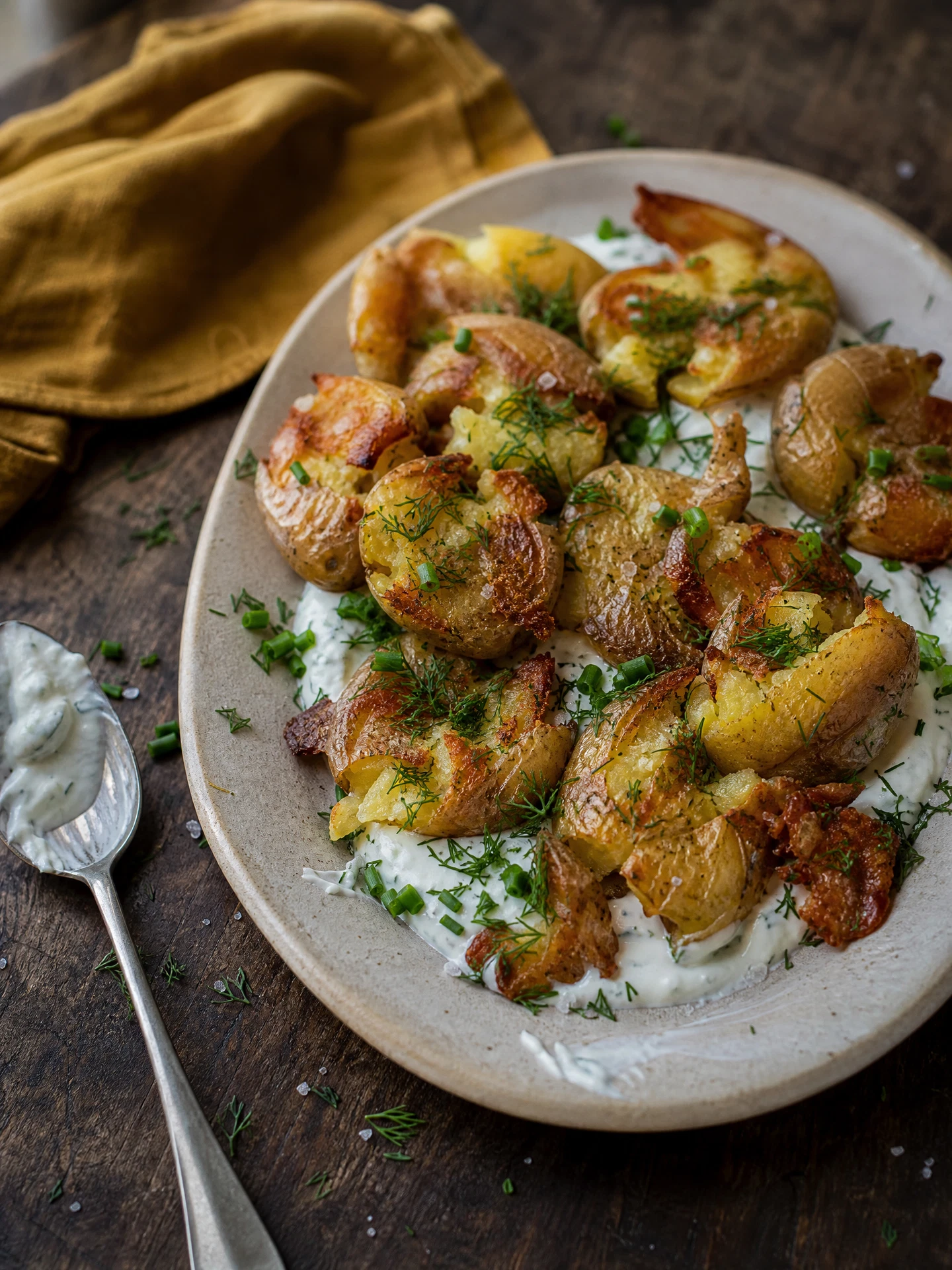
Smashed Herb Potatoes with Garlic Yogurt
Boiled, flattened, then roasted hard — the surface area is the entire point.
55 minutes · 4 to 6 servings
Sides & Vegetables